
For high-income parents who expect little or no need-based aid, pay a meaningful income-tax bill, and want a smarter way to cover college costs.
The Tax Scholarship BoxHouse Program
Little Financial Aid. A Large Tax Bill. College Still Has to Be Paid.
Enroll in a guided program that helps your family evaluate whether a properly structured BoxHouse business strategy may create qualifying depreciation and cash-flow opportunities that can help close the college funding gap without buying traditional real estate.
Successful families can still face a major college funding gap: little or no need-based aid, a high out-of-pocket college cost, and the choice of using after-tax income, drawing down savings, or taking on loans.
The program evaluates whether a qualifying BoxHouse business and tax strategy could help address that gap through potential tax savings, ownership of a real operating asset, and potential cash flow that can support college costs.
That is what your $997 enrollment helps you evaluate through education, personalized analysis, specialist access, and a clear decision process. You are not purchasing a BoxHouse at checkout.
One-time program payment. The BoxHouse, financing, professional services, and all implementation expenses are separate.
30-day program-fee guarantee. See terms below
WATCH
See How BoxHouse May Help Change the College-Funding Equation
“I wish I could put everyone on a plane and take you inside the BoxHouse facility with me. These homes make far more sense when you can see the engineering, the deployment model, and the scale of the housing problem they are designed to solve. I went there with a camera team so I could bring that experience to you.”
– LANCE MORGAN
Portable Housing Engineered for Rapid Deployment
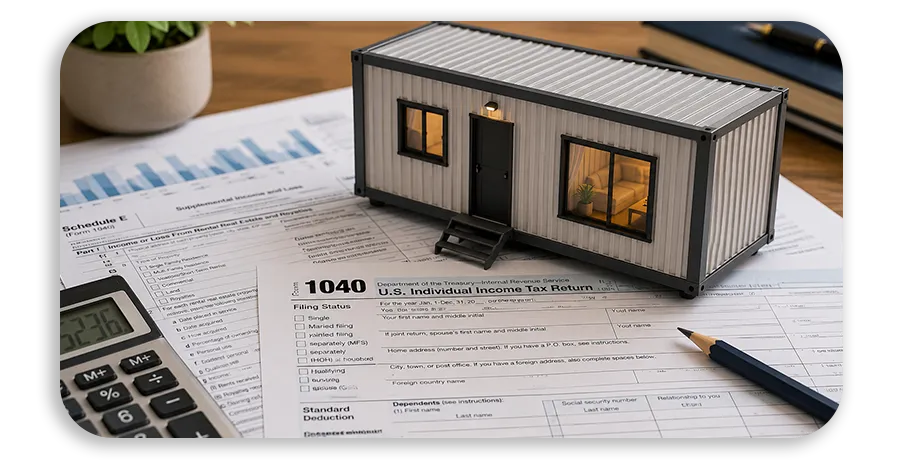
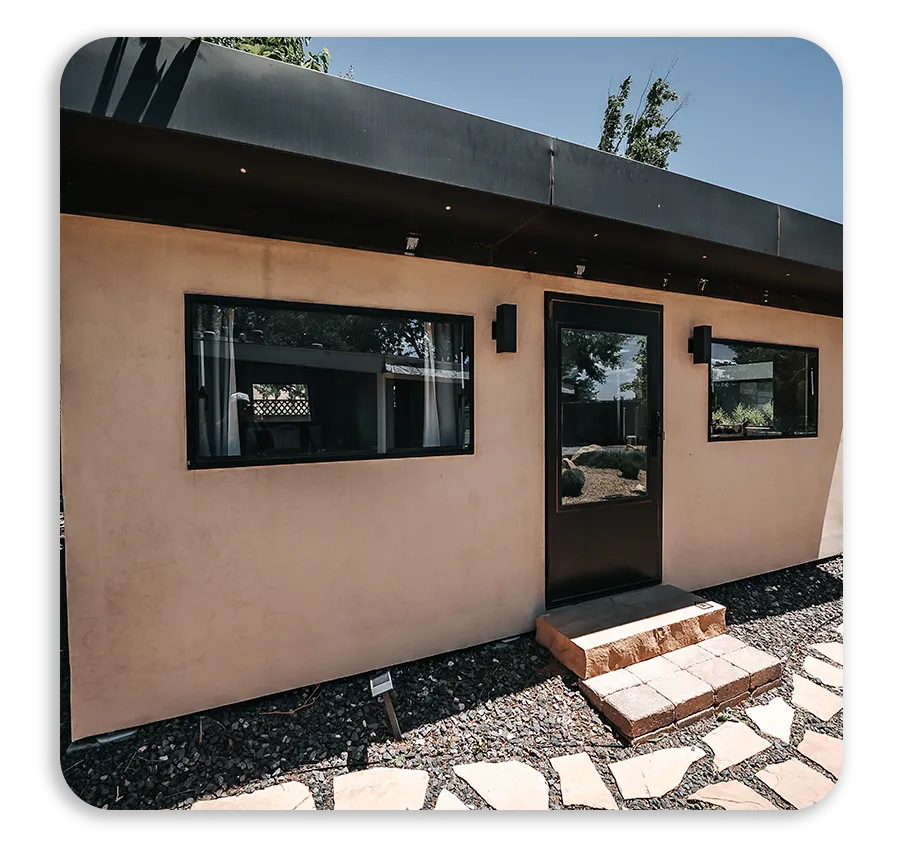
A BoxHouse is a steel-framed, foldable housing unit designed to be transported compactly and opened at the deployment site. The current technical program describes the unit as tangible personal property rather than real estate fixed to the participant's land.
Representative units shown in the program materials include a bathroom and shower, kitchen appliances, cabinetry, laundry equipment, storage and sleeping configurations, climate control, and adjustable supports for site leveling. Model, dimensions, finishes, appliances, furniture, installation requirements, utility needs, and off-grid capabilities vary.
The original program uses BoxHouses to address workforce-housing and disaster-response needs. BoxHouse manufactures the unit. ReadyPod coordinates deployment and ongoing operations under separate agreements.
Gallery
Representative BoxHouse models are shown. Specifications, finishes, included equipment, deployment process, and availability vary.











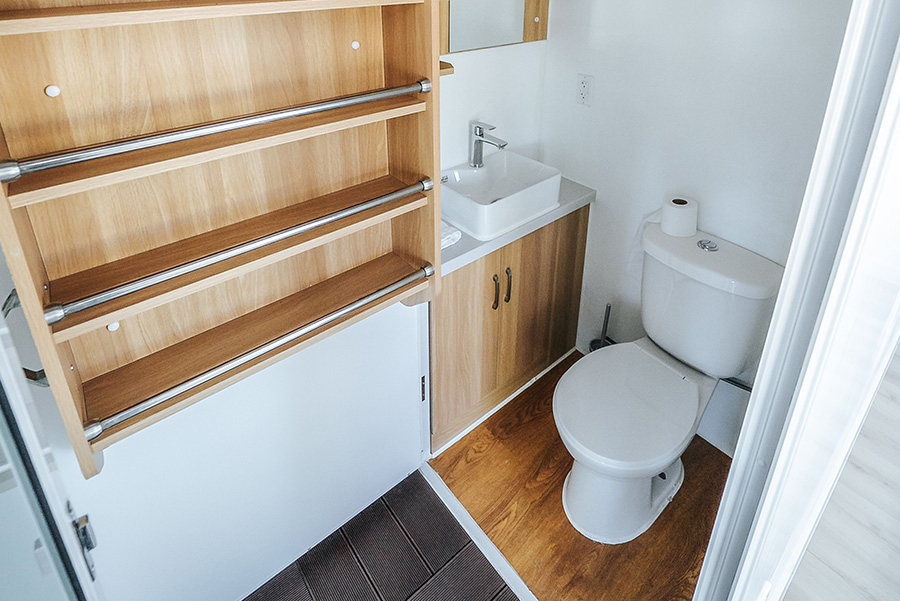
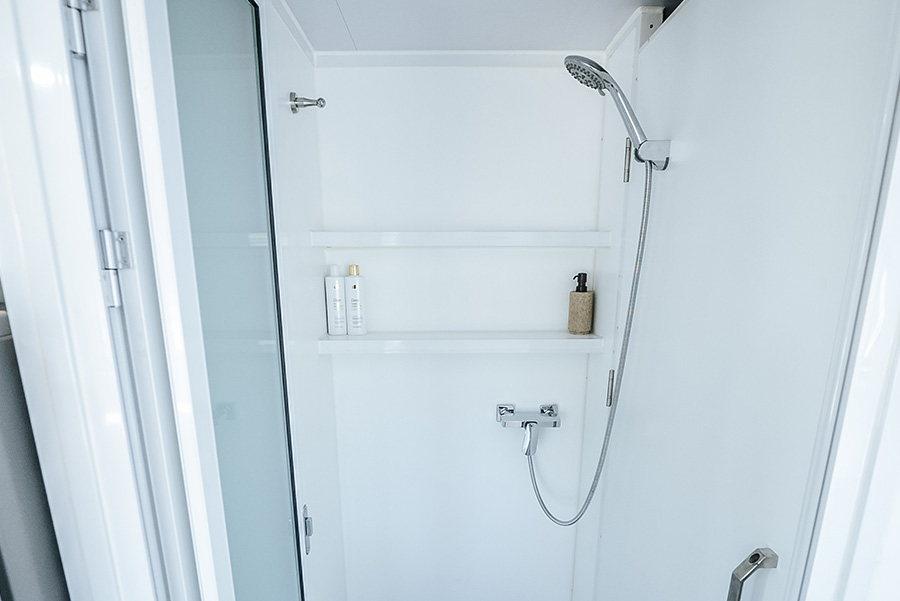




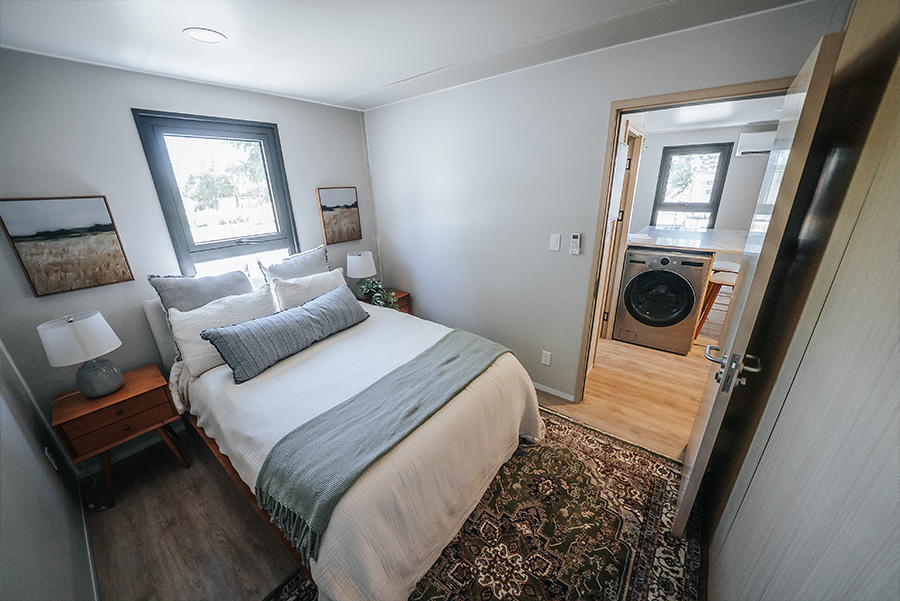


High-Income Families Can Face a Large College Bill and a Large Tax Bill at the Same Time
If your family receives little or no need-based aid, most of the net college price may have to come from after-tax income, savings, or loans. At the same time, a large annual tax bill can consume dollars that could otherwise help close the college funding gap.
Because tuition is paid with after-tax dollars, the amount your family must earn can be meaningfully higher than the college bill itself. The exact pre-tax amount depends on your effective tax rate.
That creates three pressures at once:
Little or no need-based aid leaves a larger out-of-pocket college obligation.
Paying cash can drain liquidity, while borrowing can add years of interest.
A large annual tax bill leaves fewer dollars available to cover college costs.
The program first calculates the real college funding gap, including opportunities to increase financial aid eligibility and maximize free money. It then evaluates whether a qualifying BoxHouse business and tax strategy could help address the remaining gap through potential tax savings and cash flow.
The objective is not to acquire an asset for its own sake. It is to determine whether a qualifying BoxHouse strategy can help your family cover college costs with less reliance on after-tax cash and education debt.
"I was looking for a better way to pay for college. I was going to just use the equity in my home."
– DEBORAH FREEMAN, College Funding Secrets Client
What we mean by a “tax scholarship”
We use “tax scholarship” as a planning term for potential tax savings a family may legally retain through qualifying business tax strategies and then apply toward college-related goals. It is a third source to evaluate after traditional scholarships and need-based financial aid.
It is not a scholarship awarded by a college, government agency, or charity. It is not guaranteed, and it does not replace advice from your own qualified tax, legal, or financial professionals.
Tax law includes incentives intended to encourage qualifying investment, business activity, and housing creation. Whether a particular provision applies depends on the taxpayer, entity, financing, asset, placed-in-service date, documentation, and current law.
How the program works
STEP 1 →
Calculate the real college
funding gap
Your Senior Advisor helps you quantify:
The number and ages of your students
Expected college start dates
Likely schools and projected net costs
Existing savings and resources
Scholarship and school-discount opportunities
Opportunities to increase financial aid eligibility
The amount your family may otherwise pay from income, savings, or loans


STEP 2 →
Compare the funding gap with the tax opportunity
The team compares your projected college funding gap with your current tax situation. The goal is to determine whether potential tax savings and BoxHouse cash flow could materially reduce the amount you otherwise need to cover from after-tax income, savings, or loans.
This is a screening and strategy conversation. It is not a tax opinion, return-preparation engagement, or promise of a deduction.

STEP 3 →
Evaluate the current BoxHouse program model
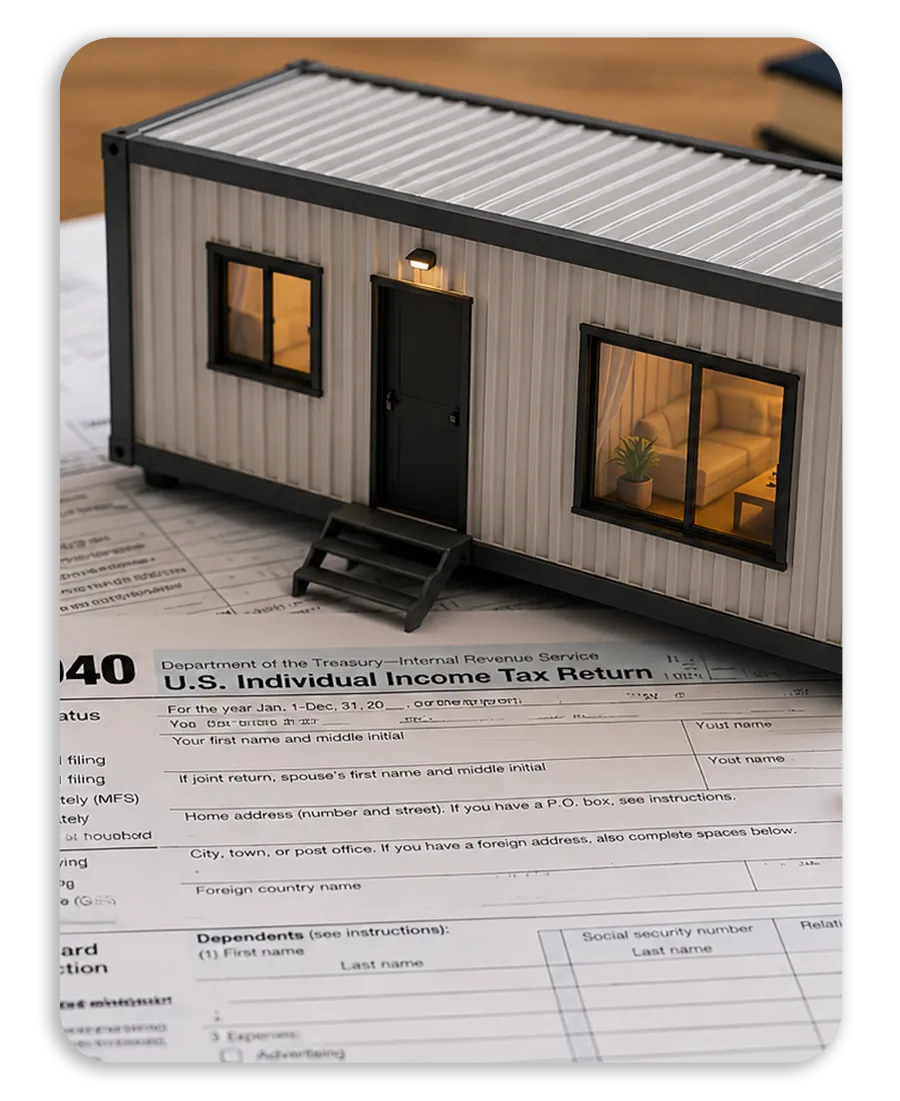
The page presents one implementation model only. After enrollment and professional review, a qualifying participant may choose to fund a separate transaction in which an approved ownership structure acquires a BoxHouse for workforce-housing or disaster-response deployment through the program's current ReadyPod-supported model.
Program materials describe the BoxHouse as portable tangible personal property rather than a customer-operated rental property. They also describe a comparatively hands-off model in which ReadyPod coordinates deployment, contract sourcing, storage when undeployed, maintenance, insurance, and ongoing operations under separate written agreements. Exact responsibilities, fees, distributions, financing, cash-flow, and exit terms must be confirmed in the final transaction documents.
You do not select an alternate property use on this page.
STEP 4 →
Complete professional review and decide
If the preliminary strategy appears suitable, the next stage may include review by qualified tax, legal, accounting, lending, insurance, valuation, and other professionals. You then decide whether to fund the separate BoxHouse transaction and enter the applicable implementation agreements.
There is no obligation to fund a BoxHouse transaction merely because you enroll in this program.

What you may receive before the larger decision
If your family advances beyond the initial strategy stage, the technical program team may provide access to a confidential diligence package. Current availability and contents must be confirmed, but prior program materials describe items such as legal opinions, an entity-flow diagram, a technical slide deck, sample trust and note documents, a sample buyer packet, and other implementation agreements.
These materials explain a program structure. They are not individualized legal or tax advice, and they do not replace review by your own qualified professionals.
WATCH
Webinar Replay
The complete Tax Scholarship BoxHouse Program Offer
CORE PROGRAM:
Your College Funding
and Tax Strategy Plan
Your enrollment includes a College Funding Plan appointment, a Tax Strategy Session, and ongoing access to pursue BoxHouse purchases.
Core component #1 →
College Funding Plan
Meet with a senior advisor to:
Narrow the college list for each child
Estimate the expected cost and timing of college
Compare likely costs across schools
Calculate the projected out-of-pocket college funding gap
Build a practical college funding plan around the amount your family may need to cover

Core component #2 →
Tax Strategy Session
Meet with a senior advisor and, when appropriate, members of the tax team to:
Review your broad tax situation and planning objectives
Explore potential legal tax strategies that may help reduce your tax burden
Determine whether a BoxHouse or another available tax-mitigation program warrants further review
Consider how potential tax benefits and cash flow may help address your college funding gap
Identify the professional reviews and next steps required before implementation

Core component #3 →
Ongoing BoxHouse Purchase Access
Your enrollment gives you ongoing access to pursue an unlimited number of BoxHouse purchases for years to come without paying the program-enrollment fee again for each purchase. Every transaction remains subject to product availability, eligibility, then-current transaction terms, professional review, and required approvals.
Program enrollment provides access to pursue BoxHouse purchases. It does not include the purchase price of a BoxHouse or any transaction, implementation, or operating costs.
BONUSES:
BONUS #1 →
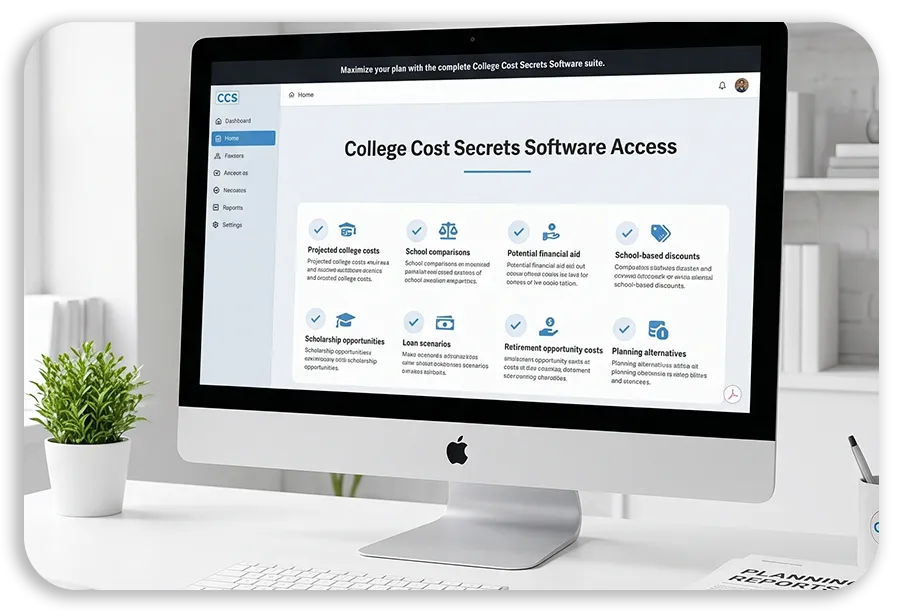
College Cost Secrets Software Access
Use the College Cost Secrets platform to compare schools, estimate school-specific costs, identify opportunities to increase financial aid eligibility, maximize free money through school-based discounts and scholarships, compare loan scenarios, and calculate the remaining out-of-pocket funding gap.
BONUS #2 →
CPA Tax-Return Review
Have a qualified CPA review your tax returns to identify areas that may warrant deeper analysis and potential strategies you may not be using as a new business owner. Implementation, amended returns, ongoing preparation, representation, and other CPA services may require a separate professional engagement and fee.

BONUS #3 →
Access to Additional Tax-Mitigation Programs
Based on your circumstances, receive education and appropriate introductions to other tax-mitigation programs that may be worth exploring. The tax team supporting this program reports investing more than $2 million each year to identify potential programs and more than $500,000 each year with three senior tax attorneys to review program structures and conduct due diligence.
Access does not mean that every strategy will be available, appropriate, or recommended. Each opportunity requires separate professional review.

BONUS #4 →
Give One Full Program Enrollment to a Friend or Family Member
Choose one family member or close friend to receive one complimentary Tax Scholarship BoxHouse Program enrollment without paying a separate program fee.
This bonus covers program enrollment, not a BoxHouse unit or any transaction, implementation, professional-service, insurance, or operating costs.

BONUS #5 →
Private BoxHouse Community
Join a private community with program resources, scheduling links, educational materials, BoxHouse updates, tax and college-planning information, implementation announcements, and member support.

OFFER SUMMARY:
Normal program investment: $5,997
Current enrollment discounted investment: $1,997
Summer Promotional
Investment: $997
Price increases on Sunday, July 26, 2026 at 11:59pm PST
The $997 payment enrolls you in the advisory and education program and includes the benefits stated above. It does not fund a BoxHouse transaction or include the unit, trust or entity funding, financing, administrative fees, implementation, professional services, insurance, or operating expenses.
Why this temporary price is available now
We are opening program access at this temporary summer price to help families get ahead of anticipated fourth-quarter demand.
According to program partners, more than 1,500 BoxHouses were sold across the broader network last year, including approximately 600 through our supporting group this program. Future BoxHouse purchases remain subject to inventory and then-current transaction terms.
A full 30 days to evaluate the program
Move Forward with a 30-Day, No-Questions-Asked Program-Fee Guarantee

Enroll, book your strategy call, access the program resources, and evaluate whether the current BoxHouse program belongs in your college funding plan.
If you decide the program is not right for you, email [email protected] within 30 calendar days of purchase. We will refund 100% of the Tax Scholarship BoxHouse Program fee to the original payment method. You do not need to provide a reason.
The guarantee applies only to the program fee. It does not cover a BoxHouse purchase, financing charges, third-party professional services, or any other separate commitment.
“Signing on was the best thing I could have done.”
– YAMINI, BoxHouse and College Funding Secrets Client, and Mother of Four
Individual experience. The program does not guarantee tax savings, cash flow, financing, or college-cost reductions

The Program May Be a Fit If…
You have one or more children approaching or attending college
Your family expects to contribute meaningfully toward college
You pay a meaningful federal income-tax bill
You want to explore a tax-smart college funding strategy
You have capital or borrowing capacity for a separate BoxHouse purchase if the strategy fits
You value guidance before making a larger financial commitment
You understand that tax and business strategies involve risk, documentation, and professional review
It Is Probably Not a Fit If…
You believe the $997 enrollment includes a BoxHouse
You need guaranteed tax savings, financing, cash flow, or investment performance
You want to buy a BoxHouse immediately without reviewing your family's college and tax numbers
You are unwilling to complete professional due diligence or sign separate implementation agreements
You expect a hands-off structure to mean there is no financial or business risk
You are looking only for admissions coaching
You are not planning to help fund college


Built at the Intersection of Housing, Tax Planning, and College Funding
The BoxHouse opportunity began with a practical question: could rapidly deployable housing address real workforce and disaster-response needs while also creating a legitimate business and tax-planning opportunity for qualifying families?
The College Funding Secrets program adds the missing college lens. Instead of evaluating a tax strategy in isolation, the team begins with the projected college cost, opportunities to increase financial aid eligibility and maximize free money, the remaining funding gap, and the amount the family may otherwise need to cover from income, savings, or loans.
The History of Kason and the Tax Strategy:
How Long Has This Program Been Around?

Who does what
College Funding Secrets connects the strategy to the family's college costs, financial-aid eligibility, available free money, tax questions, and decision process
BoxHouse manufactures the portable housing units
Highland Steel designed and distributes the technical tax program and coordinates the client transaction described in the program materials
ReadyPod coordinates the original workforce-housing and disaster-response deployment model and ongoing operations under separate agreements
Qualified legal, tax, accounting, valuation, and lending professionals evaluate and document their respective parts of the transaction
Tax Incentives Are Legal. Eligibility Is Personal.
The federal tax code contains incentives for qualifying investment and business activity. Current law may permit eligible taxpayers to accelerate depreciation on qualifying personal property, but the result depends on ownership, basis, financing, placed-in-service requirements, business purpose, activity classification, at-risk rules, documentation, and other limitations.
The program is designed to help both W-2 and business-owner households ask the right questions. It does not assume that every participant can use every deduction, or that a deduction will offset all forms of income.
Introduction and Tax Structure:
Core Tax Framework:
Visual Structure Diagram:
Excess Business Loss Limits
Technical structure described in the current program materials
The technical walkthrough describes a grantor trust funded by the participant, with the trust acquiring a controlling interest in a dedicated series LLC. The series LLC then acquires one BoxHouse using participant-provided capital and seller financing. The trust is described as guaranteeing the debt, and a qualified accounting firm maintains separate books and provides applicable tax reporting.
This description is educational. The final trust, entity, debt, ownership, management, tax reporting, and professional-service terms are governed only by the participant's executed documents.
Compliance callout
No one should fund a BoxHouse transaction solely because of an estimated deduction. Obtain individualized tax and legal advice before implementation.
“At first, I will admit that I was skeptical. I was like, ‘No, no, no. I’m very good at taxes. I’ve already got this covered.’ But the more that I started to learn about the strategy, I was like, ‘Oh, this is really interesting. This could help us significantly.’”
– THERESA CROWLEY, BoxHouse and College Funding Secrets Client
The Strategy Must Be More Than a
Tax Deduction
A real business strategy needs a genuine non-tax purpose and an economic model intended to produce income. In the current program, that operating purpose is to deploy portable housing for workforce and disaster-response needs through the ReadyPod-supported model.
Program materials report positive cash flow in certain existing deployments. Those experiences do not guarantee future contracts or results. Cash flow may be delayed, lower than projected, or negative. Financing costs, deployment timing, contract demand, maintenance, insurance, reserves, and other expenses affect the outcome.
Is Cash Flow Guaranteed?
Demand and Use Cases:
Economic Substance and Cash Flow:
Understanding Additional Costs:
College funding illustration
The webinar demonstrates how annual BoxHouse cash distributions, if and when received, could be directed toward current college costs or education-loan payments. The illustration may use an assumed $10,000 annual cash distribution per BoxHouse, but it must be labeled as an assumption, not an expected or typical result.
The strategic concept is simple: use potential tax savings to reduce the initial burden of acquiring the asset, then use potential long-term cash flow to help cover college costs. Actual results depend on the family and transaction.
“I got my money back. It’s paid for itself... So it’s exciting to see what you see maybe in the theory and the process, and see it work.”
– THERESA CROWLEY, BoxHouse and College Funding Secrets Client
Understand the Financing Before You Count the Tax Benefit
The program fee does not include financing. Current technical materials describe participant capital combined with seller-financed debt inside the approved ownership structure. Final availability and terms depend on the participant, trust and entity documents, guaranty, underwriting, personal-property transaction, and current lender or seller requirements.
The webinar may illustrate how financing increases the amount of property acquired relative to initial cash invested, and how future cash flow might help service college or BoxHouse-related debt. Those illustrations must show assumptions, timing, interest, expenses, and the possibility that the participant will need to cover payments from other funds.
Loan Details:
Financing is not guaranteed. The October 2025 walkthrough's example interest rate is stale and must not be published. Never commit to a loan amount, rate, payment deferral, approval date, or first-payment date unless it is confirmed in the participant's final financing documents.
What Happens If the Plan Does Not Perform as Expected?
Every participant should understand the downside before funding a BoxHouse transaction. The final transaction review should address:
What happens if deployment or contract placement is delayed.
Who is responsible for loan payments before cash distributions begin.
Which operating costs, reserves, and fees apply.
What happens if revenue is lower than projected.
Whether and how the BoxHouse or ownership interest may be sold or transferred.
The effect of a sale on depreciation recapture and other taxes.
What rights and obligations survive termination of an operating agreement.
Exit Strategies and Downside Options:
Frequently Asked Questions
What exactly does the $997 purchase include?
It includes the Tax Scholarship Box House Program: the 1:1 Senior Advisor strategy call and the approved supporting benefits shown on this page. It does not include the physical Box House or property-related expenses.
Is the Box House included?
No. The unit is acquired in a separate transaction through the approved ownership structure only after the family evaluates the strategy and completes the appropriate due diligence. Financing, implementation, professional services, insurance, and operating expenses are also separate unless a later signed agreement states otherwise.
What is the current BoxHouse program model?
The page presents the original workforce-housing and disaster-response model supported by ReadyPod. After enrollment, suitability review, and professional due diligence, qualifying participants may fund a separate transaction in which an approved trust and entity structure acquires a BoxHouse and enters the applicable deployment and operating agreements. Availability and results are not guaranteed.
Is the BoxHouse real estate?
The current technical program materials describe the BoxHouse as portable tangible personal property, not real estate fixed to a participant's land. The final legal and tax classification depends on the actual unit, ownership, documents, deployment, and applicable law.
Do I need to own land?
No. The original program model presented on this page does not depend on placing the BoxHouse on land you own or on operating it yourself. ReadyPod coordinates deployment under the applicable separate agreements.
Does funding a BoxHouse transaction guarantee a tax deduction?
No. Tax treatment depends on the taxpayer, entity, ownership, financing, qualified basis, placed-in-service timing, business purpose, activity classification, at-risk limitations, documentation, current law, and professional advice.
Can this work for a W-2 employee?
Some W-2 households may qualify for tax-planning opportunities, but employment status alone does not determine the result. A qualified tax professional must review how the final structure and applicable limitations interact with the participant's income.
Why does cash flow matter?
Cash flow supports the non-tax business purpose and may help pay college expenses or related loans. It is never guaranteed. The operating model, financing, deployment timing, demand, expenses, and contract performance all affect results.
When would cash flow begin?
There is no fixed date that applies to every participant. Cash flow depends on the BoxHouse purchase, financing, placed-in-service timing, deployment, contract commencement, collections, reserves, and expenses. Do not rely on cash flow beginning before it is documented.
Are the BoxHouses insured?
The current program materials state that insurance is coordinated through the operating model, but the policyholder, coverage, limits, deductibles, exclusions, responsibilities, and claim procedures must be confirmed in the final agreements and policy documents. Insurance does not eliminate operating or financing risk.
https://youtu.be/aUrFBpn4oR8
What is material participation, and does it apply to me?
Material participation is a tax-law test that can affect whether business losses are treated as passive or nonpassive. It is fact-specific, evaluated annually, and should be documented with a qualified tax professional. The program does not guarantee that any participant will satisfy it.
What happens if I am audited?
Tax positions should be prepared and documented by qualified professionals. Return preparation, audit support, representation, and defense depend on the participant's separate engagement with the relevant tax professional. No audit outcome is guaranteed.
https://youtu.be/_Q6zeuLWDKU
What due diligence should I complete before funding a BoxHouse?
Review the structure, tax analysis, legal documents, financing, appraisal and basis support, insurance, operating agreements, cash-flow assumptions, fees, exit rights, and professional-service scope with your own advisors before funding a separate transaction.
A CPA's BoxHouse Due-Diligence Perspective | https://youtu.be/cHhDZH5Amj8
Individual experience. A CPA's decision to participate is not an endorsement, a guarantee, or evidence that the strategy is appropriate for another family.
Will the strategy increase my financial aid?
Not necessarily. The program may help a family identify opportunities to increase financial aid eligibility or uncover school-based discounts, but each school and methodology may treat income, assets, entities, and business interests differently.
Can I purchase more than one BoxHouse?
The program does not impose a general one-unit limit, but each purchase requires separate availability, financing, professional review, and final agreements. No family should assume that one successful transaction guarantees another.
Is financing available?
Third-party financing may be available to qualified applicants. Approval, amount, rate, term, collateral, payment schedule, and timing are not guaranteed and are separate from the $997 program.
How quickly can I get started?
You can enroll and book the BoxHouse Strategy Call immediately. Any BoxHouse purchase or implementation depends on advisor and professional availability, underwriting, product availability, documentation, financing, deployment capacity, and other transaction-specific requirements.
What is the 30-day money-back guarantee?
You have 30 calendar days from the program purchase date to evaluate the Tax Scholarship BoxHouse Program. To cancel, email [email protected] within that period. The program fee will be refunded to the original payment method, and program access and unused benefits will end. The guarantee does not apply to any separate third-party commitment.
“It’s good to have an expert show you what works for most people and what you specifically need. That personalized attention is really what I think makes the difference here.”
– JACK BEAL, BoxHouse and College Funding Secrets Client
Before You Commit to a BoxHouse,
Build the Right College Funding Strategy Around It
The Tax Scholarship BoxHouse Program helps you connect college costs, potential tax opportunities, professional review, the current workforce-housing and disaster-response model, financing, and cash-flow assumptions before you make the larger decision.
Join today for a one-time payment of $997.
Protected by the approved 30-day program-fee guarantee.
College Funding Secrets and the Tax Scholarship BoxHouse Program provide education, planning resources, and access to professionals. Nothing on this page is individualized tax, legal, accounting, investment, securities, lending, insurance, financial-aid, personal-property, valuation, or college-admissions advice.
Tax treatment, depreciation, deductions, basis, financing, unit value, cash flow, contract availability, expenses, college costs, financial aid eligibility, and investment results vary. Business and financed-asset activities involve risk, including loss of capital, negative cash flow, financing obligations, delays, repairs, regulatory change, tax recapture, and operating liabilities.
Before funding a BoxHouse transaction or implementing a strategy, consult qualified tax, legal, accounting, financial, lending, insurance, valuation, and other relevant professionals. Verify all product specifications, ownership terms, financing terms, deployment obligations, warranties, operating agreements, and exit rights in writing.
Copyright © 2026. College Funding Secrets LLC. All Rights Reserved.
Privacy Policy | Terms of Service